
Free Tools
SnapCalories App Snap a photo of your food and let AI calculate your calories, protein, carbs, fat, ingredients, and nutrition facts in seconds. Get instant meal analysis, allergen alerts, and personalized health tips to help you eat smarter and hit your fitness goals. Click Here
NutriScan App An app built for scanning packaged foods — quickly scan the barcode to access nutrition facts, ingredients, calories, allergens, and how well the product fits your diet. Compare products, save your favorites, and make smarter food choices with instant barcode scanning. Click Here
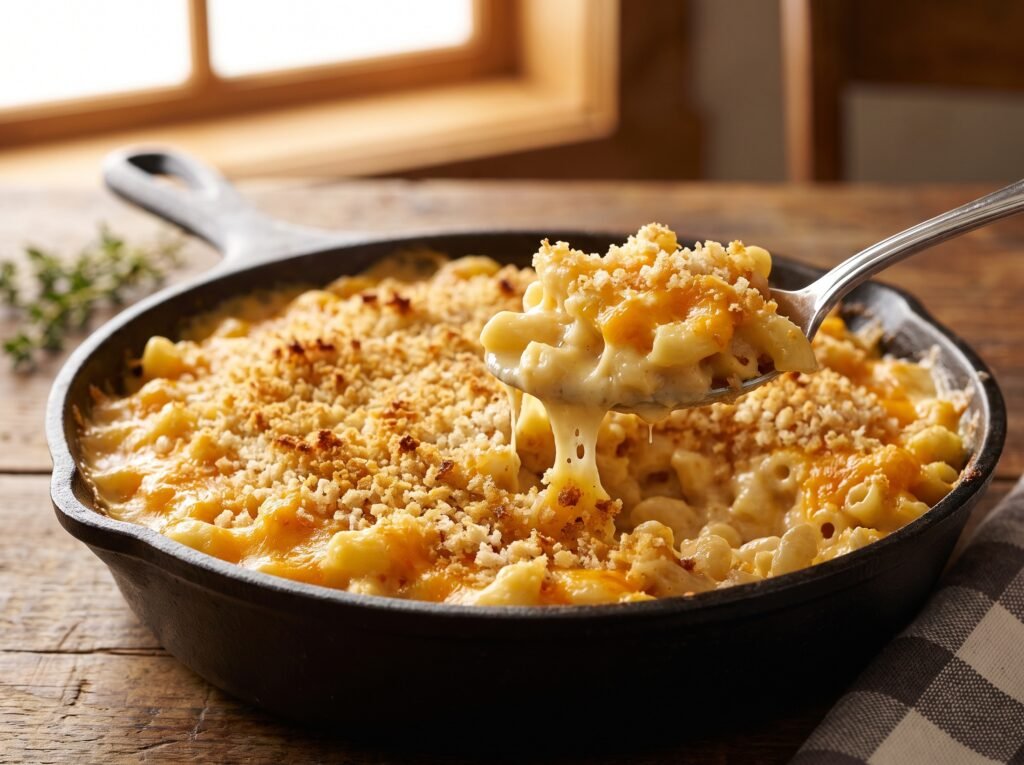
Macaroni and cheese holds a dual identity in American food culture: a nostalgic staple from a blue box, and a dish serious cooks fuss over for the perfect creamy sauce. Its American history is often linked to Thomas Jefferson, who encountered pasta in Europe and helped popularize macaroni after returning from France in the 1780s. But the dish truly became a household staple during the Great Depression, when Kraft introduced its boxed version in 1937 — a shelf-stable meal that could feed a family for pennies.
What You’ll Need
- 1 lb elbow macaroni
- 4 tablespoons butter
- ¼ cup all-purpose flour
- 3 cups whole milk
- 1 teaspoon dry mustard powder
- ½ teaspoon paprika
- 3 cups shredded sharp cheddar
- 1 cup shredded Gruyère or Monterey Jack
- Salt and pepper, to taste
- Optional: buttered breadcrumbs, for topping
How to Make It
- Cook the macaroni until just al dente; drain.
- Melt the butter, whisk in the flour, and cook a minute to form a roux.
- Gradually whisk in the milk, cooking until thickened enough to coat a spoon.
- Off the heat, stir in the mustard powder and paprika, then the cheeses, a handful at a time, until melted and smooth.
- Fold in the macaroni and season with salt and pepper.
- For a baked version, top with breadcrumbs and bake at 375°F for 20–25 minutes until golden. Otherwise, serve straight from the pot.
Tips for a Better Mac and Cheese
Shred your own cheese from a block — pre-shredded bags have an anti-caking coating that can leave the sauce grainy. Keep the heat low once the cheese goes in. A blend of a sharp cheese for flavor and a good melter like Gruyère gives the smoothest, best-tasting result.
Leave a Reply